What should you buy in Florence? Leather, gold, artisan perfume, hand-marbled paper, and — if you know where to look — vintage silk with a Florentine past. Those five things are still genuinely made in this city, some of them by workshops older than most countries. Everything else on the souvenir shelves, the David aprons and the “Italia” belts at three for ten euros, was made very far from the Arno and will feel like it by the time you land.
I spend my working life taking people into Florentine boutiques and botteghe, so consider this the shopping list I’d hand a friend with one free afternoon and a half-empty suitcase.
Leather: the classic, for a reason
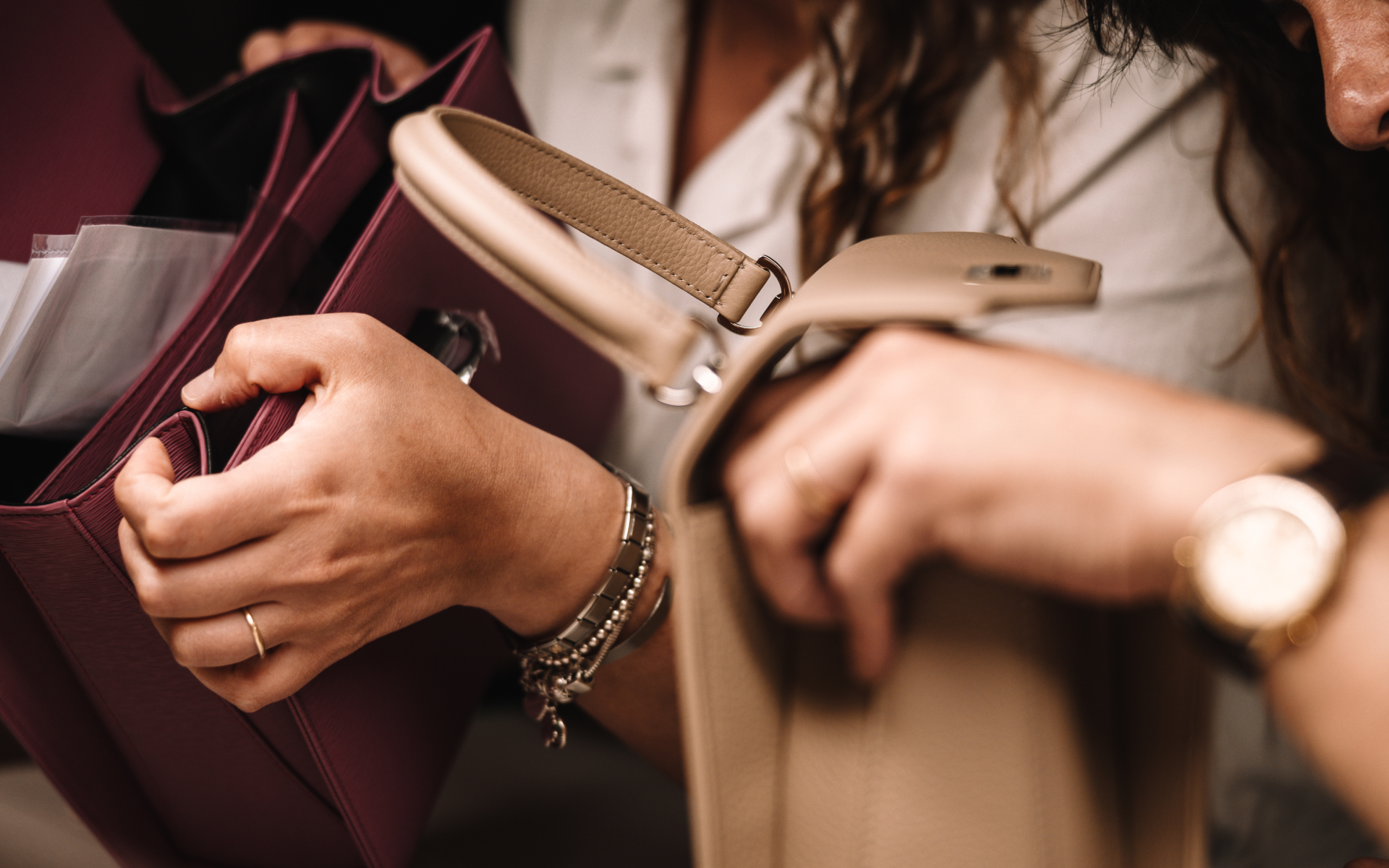
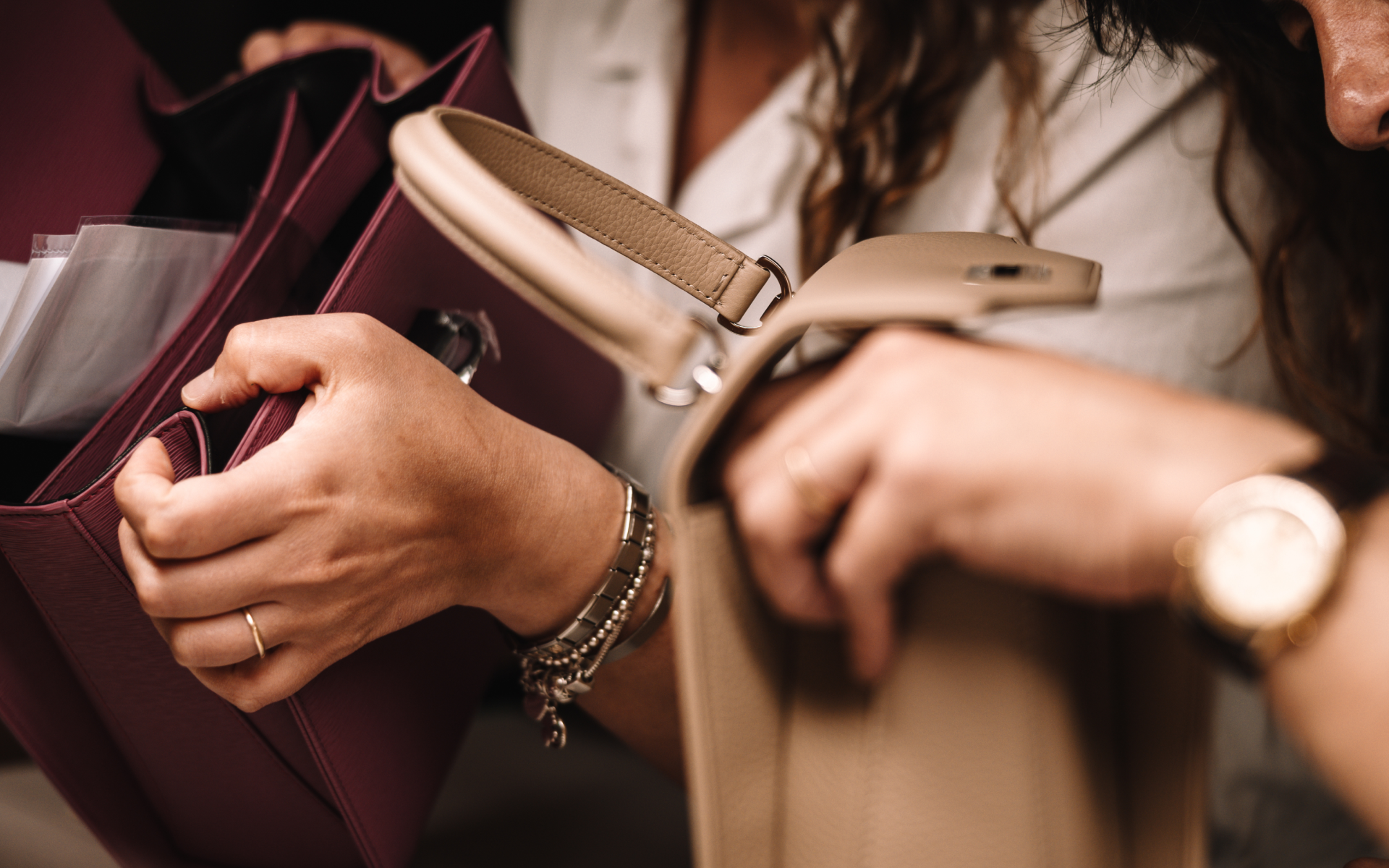
Florence has been a leather town since the Middle Ages, and it remains the single best purchase in the city — if you buy the real thing. A pair of lambskin gloves lined in cashmere, a belt cut to your size while you wait, a bag from a workshop where you can smell the hides: these last decades and cost less here than their equivalents at home.
The test kit is simple — smell it, check the cut edges, look at the reverse — and the best classroom is a real bottega: on our artisan tour of Florence’s hidden workshops you handle the hides yourself. Short version: “vera pelle” stamps mean little, workshops beat stalls for anything structured, and a price too good to be true never is.
Gold and handmade jewelry
Florentine goldsmithing predates the Renaissance, and 18-karat gold (stamped 750) is still sold on the Ponte Vecchio partly by weight, at prices that surprise Americans used to 14k mall jewelry. For pieces with a story, the goldsmiths’ botteghe of the Oltrarno sell work made at the bench behind the counter — comparing the two worlds, bridge and bottega, is exactly what our Diamond Tour is built around. Always ask for the hallmark and a written receipt; every honest seller expects it.
Artisan perfume: the souvenir that lasts longest
Nothing brings a trip back like a scent. Florence’s perfume tradition runs from the Officina di Santa Maria Novella — founded in 1221, selling a cologne created for Caterina de’ Medici in 1533 — to a handful of contemporary artisan laboratories where the person mixing your bottle composed the formula. A cologne from Florence’s artisan perfumeries costs less than most designer fragrances and no one on your street will have it. The step beyond: compose your own in our perfume workshop and carry home a formula with your name on it.
Marbled paper and Florentine stationery
The quietest of the great Florentine crafts. A few historic workshops still marble paper by hand, floating pigments on water and pulling each sheet as a one-off — you’ll recognize the peacock and stone patterns on notebooks, boxes and desk sets across the center. It’s light, it’s flat, it costs from a few euros to serious-gift money, and it’s unmistakably of this city. Look for shops that marble on the premises; many display the water bath in the window, and some will let you watch a sheet being pulled.
Vintage silk and second-hand treasure
Florence’s vintage scene is small but excellent: silk scarves from the great Italian houses, structured bags, occasionally couture with provenance, at prices well below London or Paris. It rewards knowledge, because the same rails hold treasure and overpriced polyester — sorting one from the other is the whole point of our vintage tour. A vintage Gucci foulard, bought where you can verify it, may be the single most Florentine thing you can wear.
What to leave on the shelf
Mass-produced “leather” goods with no smell and perfect edges. Souvenir-stand silk that crackles like a plastic bag. Anything sold three-for-ten. And gold with no hallmark, at any price. Florence’s real crafts aren’t necessarily expensive — rose water from an 800-year-old pharmacy costs less than lunch — but they’re never anonymous. The maker always has a name here. That’s rather the whole point of buying in Florence.
If you’d like company for that free afternoon — someone who knows which door leads to a workshop and which to a warehouse of imports — that’s exactly what our fashion and shopping tours are built for.
FAQ
What is Florence famous for buying? Leather goods, 18-karat gold jewelry, artisan perfume, hand-marbled paper and vintage fashion — the crafts still genuinely produced in the city.
What souvenirs are actually made in Florence? Workshop leather, goldsmiths’ jewelry (hallmarked 750), fragrances from historic and artisan perfumeries, hand-marbled stationery. If the maker can’t be named, it probably wasn’t made here.
Is shopping in Florence expensive? It spans every budget: rose water or marbled notebooks cost a few euros, workshop leather and gold sit mid-range and hold value, couture vintage climbs from there. You’re paying for craft, not marble floors.
What should I not buy in Florence? Unmarked “leather” from souvenir stands, gold without hallmarks, printed polyester sold as silk, and anything mass-produced with a Florence label glued on.